Rob Hall Antiques
Original Poor Relief hand painted wooden sign .c. 1920
Original Poor Relief hand painted wooden sign .c. 1920
Couldn't load pickup availability
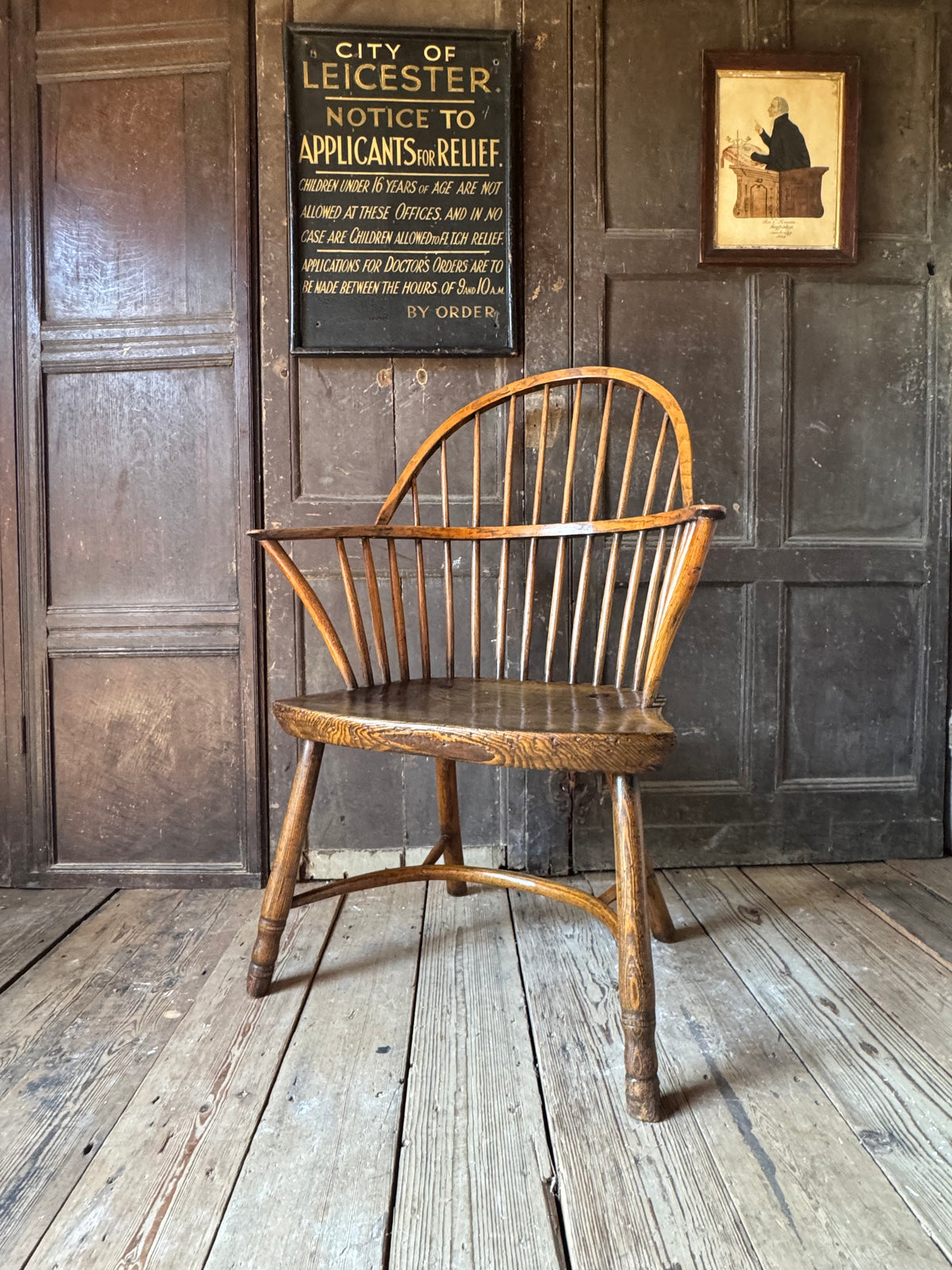
City of Leicester Poor Relief Notice, c.1910–1930
An original early 20th-century painted municipal sign issued by the City of Leicester, giving instructions to applicants seeking Poor Law relief.
Hand painted in gilt lettering upon a black ground and retained within its moulded wooden frame, the notice reads:
CITY OF LEICESTER
NOTICE TO APPLICANTS FOR RELIEF
CHILDREN UNDER 16 YEARS OF AGE ARE NOT
ALLOWED AT THESE OFFICES, AND IN NO
CASE ARE CHILDREN ALLOWED TO FETCH RELIEF.
APPLICATIONS FOR DOCTORS ORDERS ARE TO
BE MADE BETWEEN THE HOURS OF 9 AND 10 A.M.
BY ORDER
The sign belongs to Leicester’s administration of the Poor Law during the early decades of the 20th century. At this date those requiring assistance could apply to the local Poor Law authorities for relief, including outdoor relief — assistance provided without the recipient entering the workhouse.
Leicester’s purpose-built Poor Law Offices stood at Pocklington’s Walk, with the complex also associated with Rupert Street. The offices were erected in 1883 at a cost of £5,000, to designs by the Leicester architects Redfern & Sawday. Contemporary directories record the Guardians meeting there, together with a Relief Committee, relieving officers and medical officers responsible for administering the system.
The reference on the sign to “Doctors Orders” relates directly to the provision of medical assistance under the Poor Law. Medical officers were appointed to districts alongside the relieving officers, and the notice regulated both who could attend the relief offices and the hours during which applications for medical orders could be made.
The offices became the focus of a significant episode in Leicester’s social history in 1921, during a period of severe post-war unemployment. A large demonstration by unemployed people seeking relief gathered outside the Poor Law Board of Guardians’ offices in Rupert Street. The protest developed into a serious confrontation with the police and spread into the city centre, resulting in violence and damage. Contemporary and archival accounts subsequently referred to the disturbance as a riot.
The sign provides a direct record of the regulations imposed upon those seeking assistance from this system. The instruction that children under sixteen were not permitted at the offices, nor allowed to collect relief, illustrates the practical controls governing the everyday administration of Poor Law assistance.
Constructed as a wooden panel within a moulded wooden frame, the sign is hand painted. The surface retains considerable evidence of age and use, including craquelure, scratches, small paint losses, old fixing holes and general wear. There is evidence of historic repainting or strengthening to areas of the black ground and possibly portions of the lettering. The appearance and subsequent wear of these areas suggest that this work is itself old.
The exact date of manufacture is unrecorded. Its administrative context places it within the period of Poor Law administration before the abolition of the Boards of Guardians in 1930, and a date of circa 1910–1930.
Measuring: 56.5 cm x 40.5 cm
English, City of Leicester, circa 1910–1930.
Share